RE-APS
RE-APS
Thermomechanical recycling of polyester textiles
Development of textile polyester recycling through a thermomechanical process.
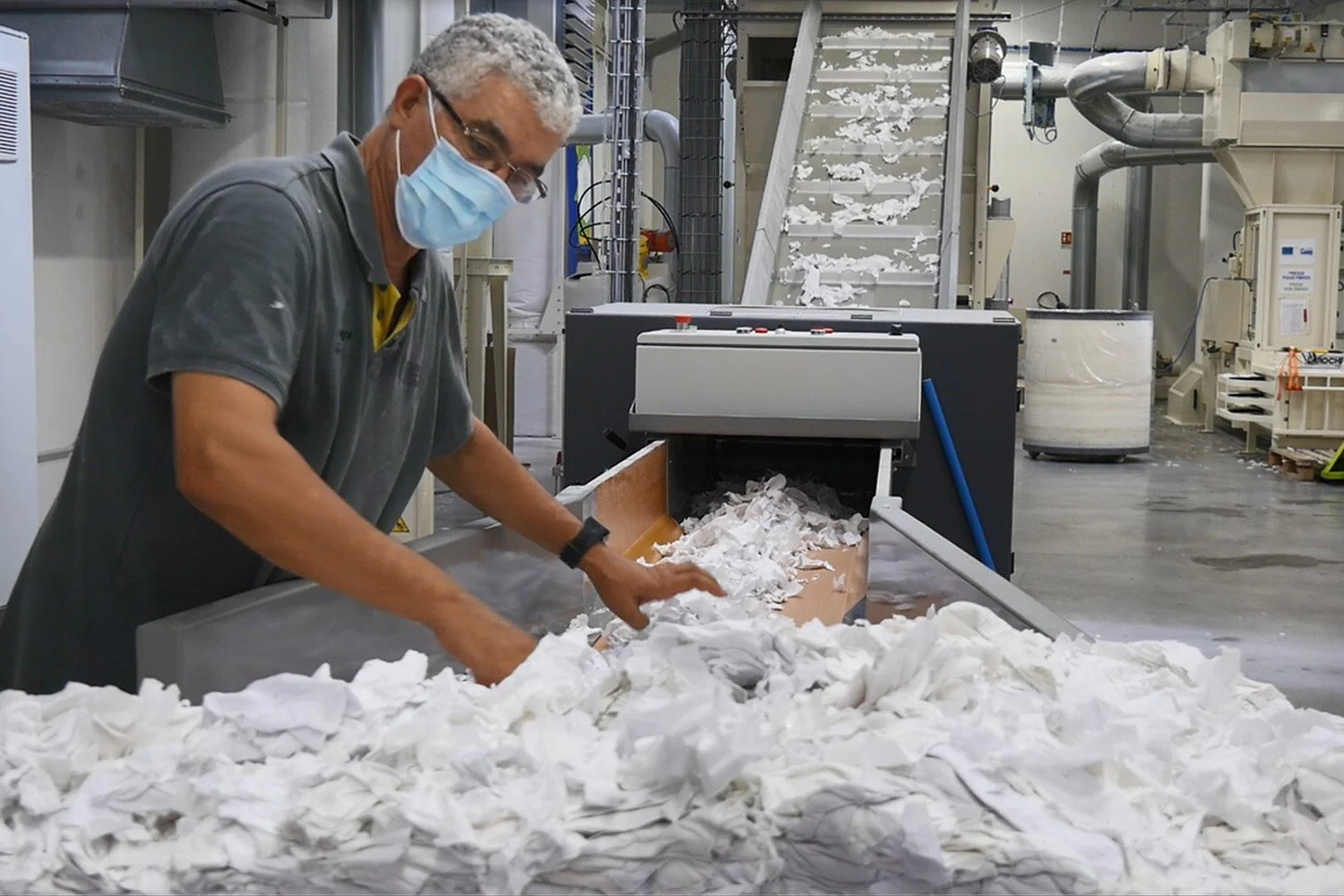
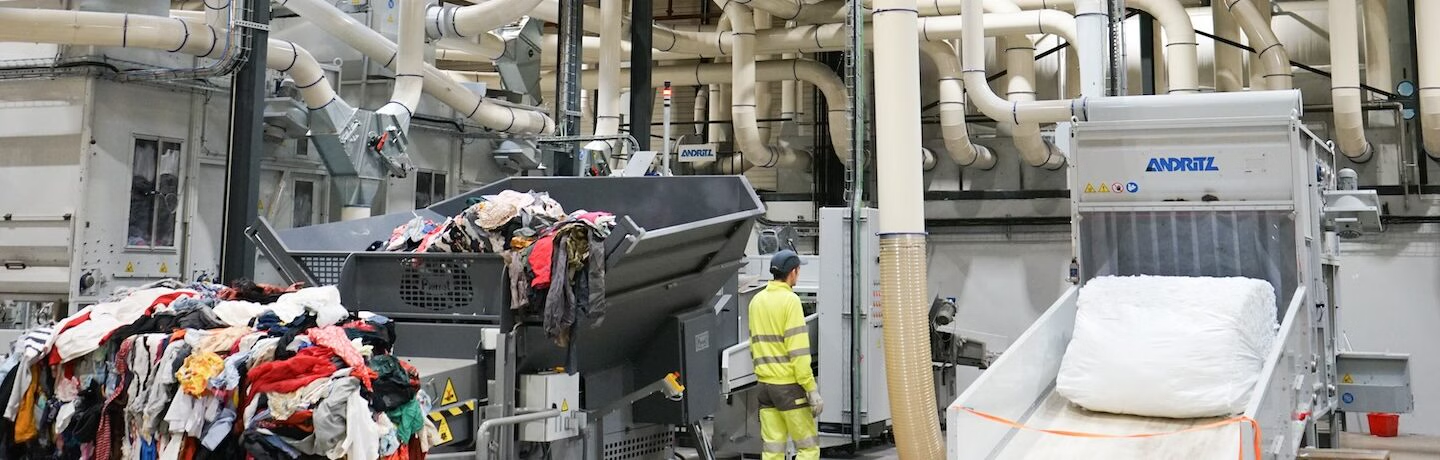
The RE-APS project, funded under the INTERREG France–Wallonia–Flanders programme, focuses on developing the recycling of textile polyester through a thermomechanical process. This involves the pre-treatment and shredding of textile polyester waste, followed by melting and the reuse of the resulting pellets within the textile value chain.
RE-APS aligns with European priorities supporting innovation, applied research and the deployment of advanced technologies to drive industrial transformation. The project contributes to the European Green Deal objectives of climate neutrality by 2050, while strengthening competitiveness and resource efficiency.
It also supports the EU Strategy for Sustainable and Circular Textiles (2021), which promotes circularity through improved resource management and increased investment in research and innovation. By focusing on textile-to-textile recycling of polyester, RE-APS anticipates regulatory developments that will limit the availability of recycled polyester derived from post-consumer bottles for textile applications.
As textile polyester accounts for more than half of global fibre production and remains largely underexploited at end of life, RE-APS addresses a strategic challenge for Europe: securing sustainable, high-value secondary raw materials. Through cross-border cooperation and strong industrial involvement, the project contributes to the resilience and sustainability of the European textile ecosystem.
RE-APS is part of the CROSS S3 portfolio, which brings together eight projects aimed at strengthening cross-border and cross-sectoral innovation. The RE-APS project will interact with other projects within the portfolio, including R-EU-CYCLE and TECH4FAB.
“RE-APS aims to develop circular value chains based on post-consumer and post-industrial textile polyester, enabling its thermomechanical recycling and transformation through textile and plastics processing routes for applications within the project territory. RE-APS also aims to deliver prototypes, proofs of concept and models transferable to industry.”
-
The RE-APS project aims to develop and demonstrate thermomechanical recycling solutions for textile polyester, enabling its reintegration into textile applications as a priority. Building on previous laboratory-scale work, the project seeks to scale up recycling processes to pilot level in order to prepare for industrial deployment.
Specifically, RE-APS aims to:
Develop and validate thermomechanical recycling processes for post-consumer and post-industrial polyester textiles;
Produce recycled polyester pellets suitable for melt spinning and nonwoven processes (mono- and multifilament, mono- and bicomponent);
Demonstrate the technical and economic feasibility of recycling textile polyester at pilot scale;
Mobilise stakeholders across the textile and plastics value chains to structure viable recycling pathways and markets;
Prepare the conditions for future industrial-scale deployment, job creation and cross-border cooperation.
-
Operating partners:
EuraMaterials, a competitiveness cluster dedicated to materials processing industries in the Euroregion, and Lead Partner of the project;
Fedustria, the Belgian federation of the textile, wood and furniture industries, responsible for communication activities;
Centexbel, a Belgian research centre specialising in textiles and plastics;
CETI, an experimental and industrialisation platform for textile materials based in the Hauts-de-France region.
-